Tile Mortar vs
Tile Adhesive
The choice between cement-based thinset mortar and organic mastic adhesive determines project durability. Mortar is necessary for floors, large-format tiles, and wet zones, while adhesive offers convenience for small wall tiles in dry areas. Estimate your material volumes with the thinset calculator to ensure you order the right quantity.
Thinset Volume Calculator
Select your substrate, tile size, and trowel notches to calculate the exact number of thinset mortar bags needed for your installation.
Mortar vs Adhesive Product Types
Choose your setting compound based on your tile type, room location, and exposure to water. Review the key specs for each product class below.
Product
Organic Mastic Adhesive
Suitable Area
Backsplash, dry walls only
Max Tile Size
Under 12" tiles only
Waterproof
No — breaks down in waterCure Time & Core Use
24–48 hours — Premixed convenience
Product
Modified Thinset Mortar
Suitable Area
Floors, walls, wet areas
Max Tile Size
Up to 15" standard size
Waterproof
Yes — fully water resistantCure Time & Core Use
24 hours — Standard powder cement
Product
Large Format Mortar (LHT)
Suitable Area
Floors, walls, wet areas
Max Tile Size
Tiles 15" or larger
Waterproof
Yes — fully water resistantCure Time & Core Use
24 hours — Non-slump powder cement
Product
Epoxy Mortar
Suitable Area
Specialty / industrial areas
Max Tile Size
All tile sizes
Waterproof
Excellent — chemical barrierCure Time & Core Use
8–12 hours — Rapid setting two-part resin
When to Use Organic Mastic Adhesive
Organic mastic has high initial tack and requires no mixing, making it very popular for DIY backsplash projects. However, it should only be used under the following constraints:
When Thinset Mortar is Mandatory
Portland cement thinset cures chemically through a reaction with water, meaning it gains strength even when fully submerged. Thinset is required for:
Floor installations
Thinset supports the weight of traffic without compressing or cracking.
Showers, pools and exterior
Thinset is fully water resistant and handles temperature cycles.
Large format tiles (15"+)
Heavy tiles require Large-Format Tile (LFT) mortar to prevent slump and lippage.
Substrate and System Compatibility
Always follow the instructions from your tile manufacturer and substrate manufacturer. Cement board, drywall, concrete, and waterproofing membranes require different thinset types (modified vs. unmodified thinset) to establish a proper bond. Using the wrong combination will void your system warranty.
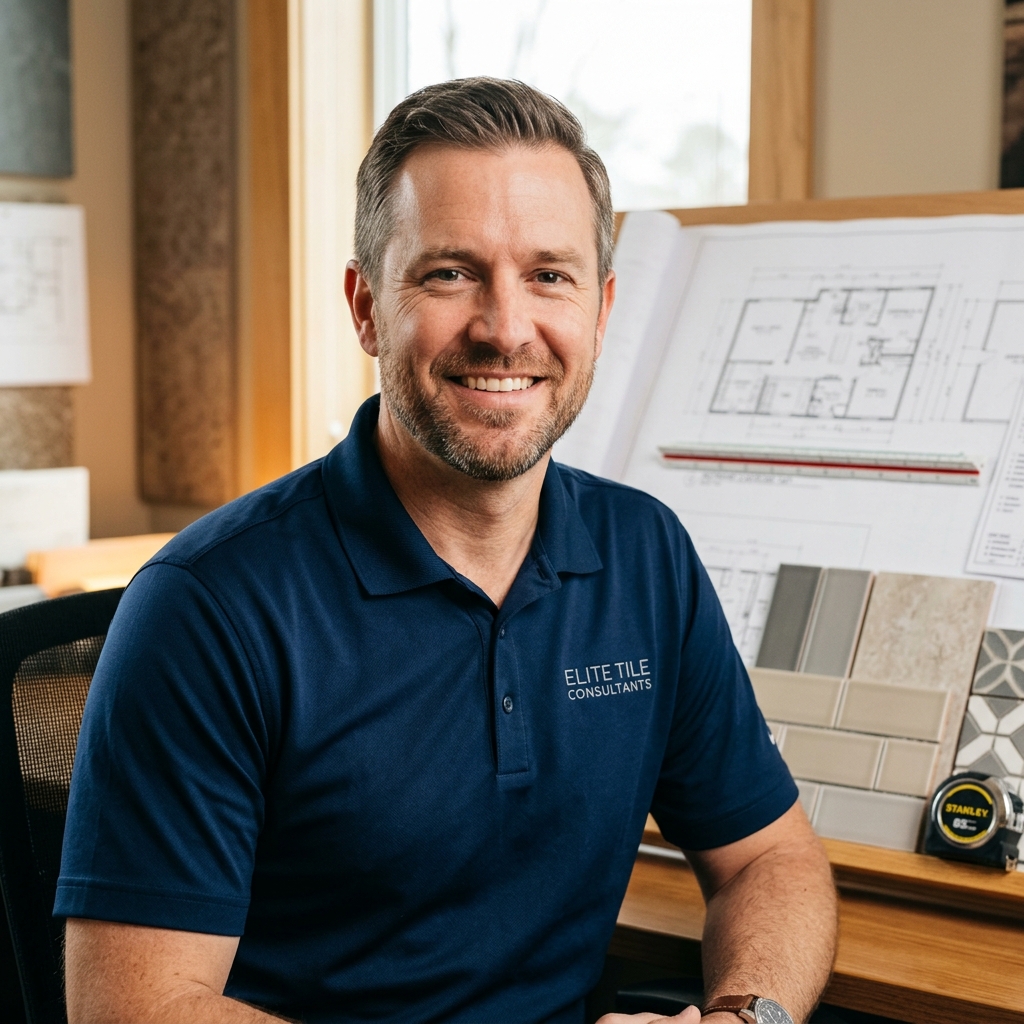
Marcus Sterling
Certified Master Tile Installer & Technical Estimator
This guide has been technically reviewed and approved by Marcus Sterling. Marcus has over 20 years of hands-on experience in residential and commercial tile setting. He is a certified installer specializing in moisture diagnostics, deflection analysis, complex layouts, and estimation accuracy.
Adhesive & Mortar FAQs
Common questions about tile thinset mortars vs mastic adhesives.
Is tile adhesive the same as thinset mortar?▼
No. Tile adhesive (mastic) is a premixed organic paste that dries by evaporation. It has excellent initial tack but is only suitable for dry walls and small tiles. Thinset mortar is a Portland cement-based powder that cures chemically, creating a structural, water-resistant bond suitable for floors, walls, and wet areas.
Can tile mastic adhesive be used in a shower?▼
No. Mastic adhesive should not be used in wet areas like shower walls, floors, or niches. It is organic and will break down when exposed to moisture, leading to tile failure and mold growth. Cement-based thinset mortar is the industry standard for all wet areas.
What is large-format mortar (LHT)?▼
Large-format tile mortar (formerly known as medium bed mortar) is designed specifically for tiles with at least one edge larger than 15 inches. It has a thicker consistency and does not shrink during curing, preventing heavy tiles from sagging or creating lippage.
When should I use epoxy mortar?▼
Epoxy mortar is used when maximum chemical resistance, high bond strength, and water impermeability are needed, such as in laboratory counters, industrial kitchens, and pools. It is more expensive and difficult to apply than cement thinset.