Tile Project
Budget Guide
Tiling projects involve multiple line items beyond just tile price. Understanding labor ratios, prep charges, and material waste is critical to avoid budget overruns. Use the installation cost calculator to build a complete, itemized cost estimate.
1. Complete Budget Line Items
A comprehensive tile project budget contains six main cost centers. Use this breakdown to see where your cash goes and avoid hidden surprise fees.
Budget Center
Tile Material & Overage
Budget Allocation
20–35%
Typical Cost
$300–$2,400
Key Description
Includes measured square footage plus 10–15% waste margin
Budget Center
Contractor Labor & Profit
Budget Allocation
50–65%
Typical Cost
$800–$4,500
Key Description
Often quoted as flat job fee or per-sq-ft rate
Budget Center
Waterproofing & Substrate
Budget Allocation
5–10%
Typical Cost
$150–$800
Key Description
Cement boards, uncoupling membranes, liquid sealers
Budget Center
Thinset, Grout & Caulk
Budget Allocation
3–5%
Typical Cost
$80–$300
Key Description
Standard setting compounds, grout lines, color-matched caulk
Budget Center
Floor / Wall Prep & Demo
Budget Allocation
5–15%
Typical Cost
$200–$1,200
Key Description
Grinding concrete, self-leveling pours, prying old tiles
Budget Center
Project Contingency
Budget Allocation
10%
Typical Cost
$150–$800
Key Description
Emergency reserve buffer for structural surprises or repair cuts
If you are removing old flooring, review the tile removal cost guide to ensure demo and prep costs are accurately captured.
2. Project Budget Templates
Tiling templates representing typical residential projects. These provide a realistic baseline budget allocation before contractor bidding.
Kitchen Backsplash Budget
30 sq ftTile Choice: Ceramic Subway ($3/sq ft)
Overage: 15% waste
- •Tile: $105
- •Materials: $60
- •Pro Labor: $600
- •Contingency: $100
Total Estimate
$865
Bathroom Floor Budget
50 sq ftTile Choice: Porcelain 12×24 ($5/sq ft)
Overage: 10% waste
- •Tile: $275
- •Prep & Mat: $180
- •Pro Labor: $800
- •Contingency: $150
Total Estimate
$1,405
Full Custom Shower Budget
120 sq ft wallsTile Choice: Mosaic + Large Wall ($8/sq ft)
Overage: 15% waste
- •Tile: $1,100
- •Waterproofing: $600
- •Pro Labor: $3,500
- •Contingency: $600
Total Estimate
$5,800
3. Common Hidden Tiling Costs
Tiling requires support gear. Online budget tools often skip these hidden fees, which can quickly add 10–20% to your final project balance.
Floor Self-Leveling Pours
If the subfloor is wavy, tiles will crack. Pouring leveling compound is essential.
Old Tile Demolition & Dump Fees
Hauling heavy ceramic waste to landfills incur solid waste disposal fees.
Metal Edge Trims (Schluter)
Finishing raw tile edges where bullnose is unavailable. Essential for backsplashes.
Floor Deflection Upgrades
Adding plywood overlays to stiffen bouncy joists before tiling.
4. Quote Review Best Practices
Evaluating contractor quotes is about details. If bid outlines are ambiguous, you might end up paying thousands in changes during the install.
What to Verify in Quotes
- Double-check matching surface square footage with your calculations
- Verify that waste allowance is itemized (typically 10% for grid, 15% for pattern)
- Confirm that prep work (poured self-leveler, joist repair) is included
- Check that shower waterproofing (KERDI board, roll-on) is explicitly listed
- Ensure dump and waste hauling fees are detailed
Quote Red Flags to Spot
- Extremely low bids that exclude material waste or clean-up hauling
- Lump-sum totals that lack itemized labor or substrate prep details
- Excluding waterproofing membranes in shower or bath surround zones
- Missing list of grout or profile trim choices
- Contractor refusing to provide license or liability coverage
Reviewing a contractor's final quote? Read our detailed Tile Estimate Review Checklist →
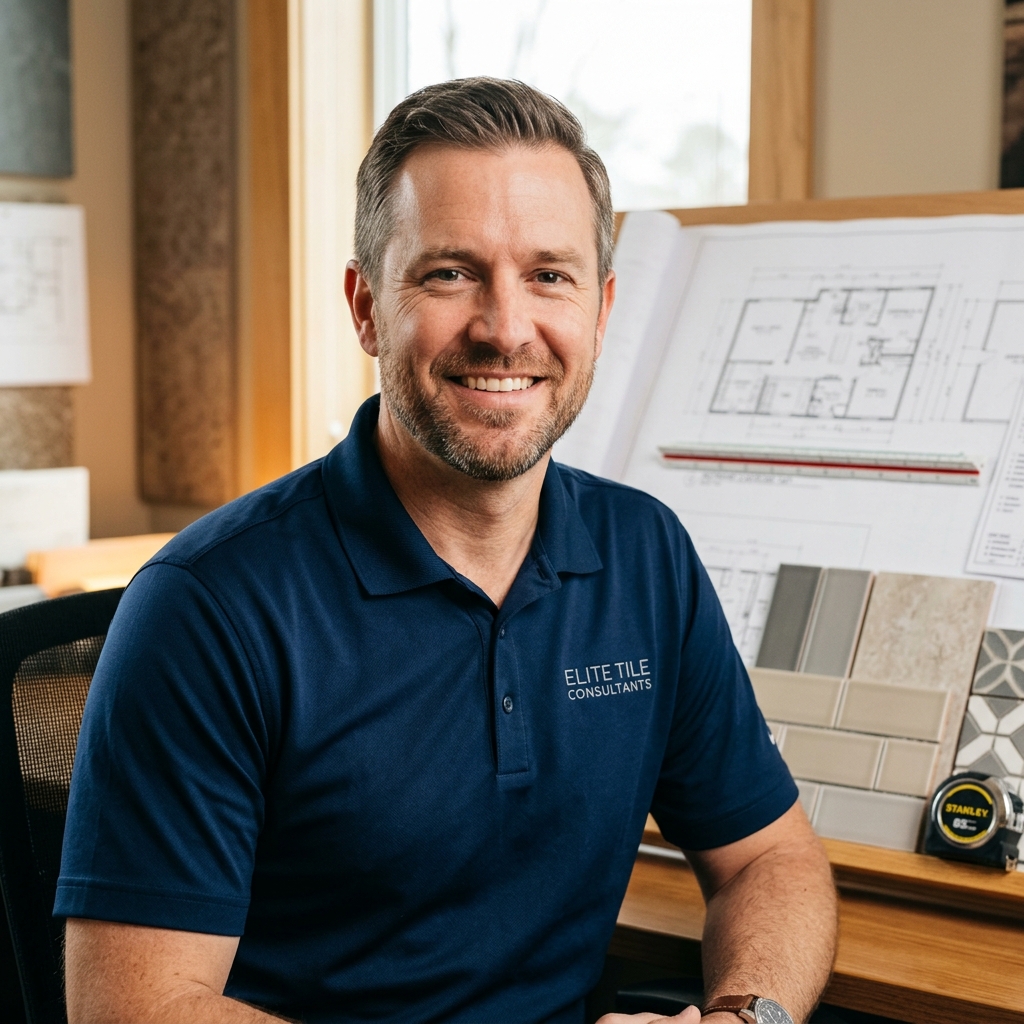
Marcus Sterling
Certified Master Tile Installer & Technical Estimator
This guide has been technically reviewed and approved by Marcus Sterling. Marcus has over 20 years of hands-on experience in residential and commercial tile setting. He is a certified installer specializing in moisture diagnostics, deflection analysis, complex layouts, and estimation accuracy.
Budget FAQs
Common questions about budget reserves, quote details, and managing hidden tile fees.
How much contingency should I set aside for a tile project?▼
We recommend setting aside a 10–15% contingency buffer. For remodeling projects where old tile is being removed, a 15% buffer is safer because you cannot see the subfloor water damage or wavy walls until the demo is finished.
What hidden costs should I expect when tiling a floor?▼
The most common hidden floor costs are: floor leveling compound ($1–$3/sq ft), transition strips to carpet/hardwood ($10–$30 each), crack isolation membrane for concrete ($1–$2/sq ft), and dump fees for hauling debris ($50–$150).
How do I compare contractor tile installation quotes?▼
Always compare itemized bids. Check that each quote lists: square footage matching, waste percentage allowance, substrate prep (e.g. self-leveling), waterproofing membranes for showers, dump/haul-away fees, and exact tile setting materials.
Is tile material or labor more expensive?▼
Labor is typically the most expensive part, accounting for 50–65% of the total project budget. However, if you choose high-end natural stone or glass mosaics ($15–$30/sq ft), the material cost can match or exceed the labor rate.