Tile Removal &
Surface Prep Cost
Tile removal and surface preparation costs average $1.50 to $7.00 per square foot. Unlevel floors, structural deflection flex, and dust control containment are the primary cost factors. Use the installation cost calculator to estimate demolition and substrate leveling costs.
1. Demolition & Prep Labor Rates
Tear-out and leveling are labor-intensive tasks. Review standard industry pricing for common surface removal and subfloor preparation services.
Prep Service
Old Ceramic Tile Removal
Pricing Unit
Per sq ft
Cost Range
$2.50–$6.00
Key Description
Includes scraping up dry mortar and disposing trash
Prep Service
Carpet / Vinyl Strip & Prep
Pricing Unit
Per sq ft
Cost Range
$0.50–$2.00
Key Description
Slicing tack strips, peeling glue-down backing
Prep Service
Concrete Floor Grinding
Pricing Unit
Per sq ft
Cost Range
$1.00–$3.00
Key Description
Flattening high spots, removing sealant coatings
Prep Service
Self-Leveling Compound Pour
Pricing Unit
Per sq ft
Cost Range
$1.50–$4.00
Key Description
Includes primer and compound bags (1/4" thickness)
Prep Service
Wall Drywall Demo & Re-hang
Pricing Unit
Per sq ft
Cost Range
$3.00–$7.00
Key Description
Required when wall tile pulls drywall backing off studs
Prep Service
Subfloor Deflection Reinforce
Pricing Unit
Flat job
Cost Range
$200–$800
Key Description
Adding plywood sister joists or blocking under floors
After structural prep is complete, choose your underlayment method. Read our backerboard vs uncoupling membrane guide for side-by-side details.
2. Demo & Leveling Scenarios
Prep requirements vary by room and subfloor condition. These three scenarios illustrate typical residential prep budgets.
Drywall Backsplash Removal
30 sq ft backsplashTotal Prep Range
$300–$600
Tearing off old adhesive pulls drywall face down to studs. Budget includes hanging new moisture-resistant board before retiling.
Wood Subfloor Leveling
150 sq ft bathroomTotal Prep Range
$500–$1,200
Pouring self-leveler over wood substrates requires sealing cracks, priming wood, and stapling mesh lathe to prevent settlement.
Waterproof Shower Strip-Out
Full enclosureTotal Prep Range
$800–$2,000
Demolishing stud backing down to wall cavities. Requires plumber drainage testing and rebuilding waterproofing from scratch.
3. Subfloor Standards & Deflection
Tiling has rigid mechanical tolerances. If your subfloor bends under load or has wavy bumps, the finished surface will quickly fail.
Flatness Tolerances
Large-format tiles require flat substrates. Any bumps cause lippage corners. Leveling compound is mandatory.
Deflection (Ceramic)
Subfloor flex limit under load. Tile mortar cannot flex; excess movement pops grout lines.
Deflection (Natural Stone)
Natural stone has zero structural flex. Joists must be twice as rigid as ceramic floors.
Asbestos Vinyl Test
Older backing and mastic adhesive containing asbestos fibers cannot be dry sanded. Test before prying.
4. Dust Control & Safety Compliance
Demolishing ceramic tiles and mortar beds releases large amounts of fine silica dust. Professional prep bids should always account for containment setups.
Dust Containment Best Practices
- Seal room entryways with plastic zipper barriers (ZipWall system)
- Block forced-air heating and cooling registers to prevent dust spreading
- Use HEPA vacuums attached directly to grinders and chisels
- Install negative-air pressure fans ducting dust directly outside
Asbestos Regulations & Risk
- Homes built before 1986 may have asbestos-containing vinyl tiles or backing
- Adhesive black mastics used on concrete slabs often contain asbestos fibers
- Dry grinding or sanding asbestos material is a serious health hazard
- Certified asbestos mitigation testing costs $50–$150 and is strongly recommended
- Contractors may refuse to proceed if untested suspect vinyl is found
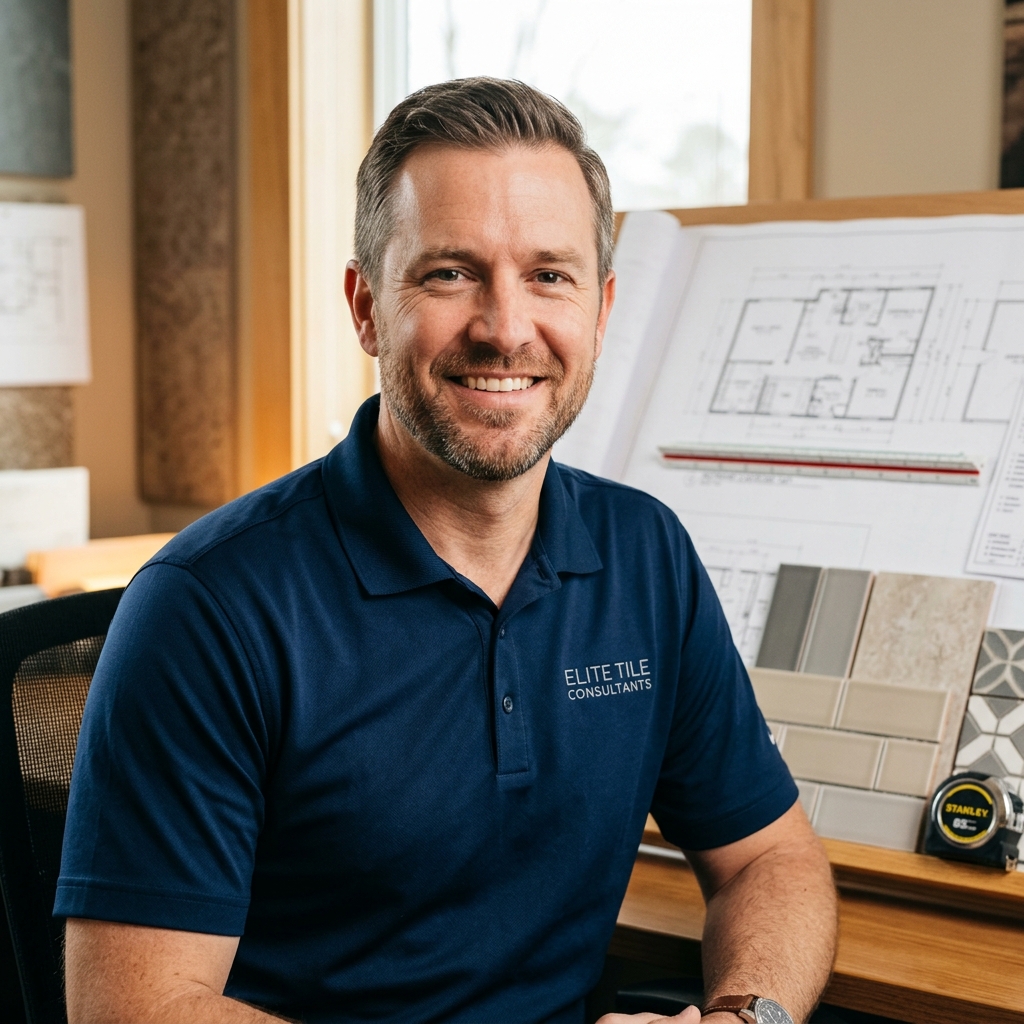
Marcus Sterling
Certified Master Tile Installer & Technical Estimator
This guide has been technically reviewed and approved by Marcus Sterling. Marcus has over 20 years of hands-on experience in residential and commercial tile setting. He is a certified installer specializing in moisture diagnostics, deflection analysis, complex layouts, and estimation accuracy.
Prep FAQs
Common questions about substrate flatnesses, grinding concrete slabs, deflection joists, and safety.
Why is surface preparation so expensive?▼
Surface preparation requires heavy physical labor and specialized tools (like concrete grinders, jackhammers, and laser levels). Mortar and tile cannot bond securely to paint, glue, or dust. Creating a flat, clean, and rigid substrate takes substantial time.
Can I install tile over an uneven subfloor?▼
No. Tiling over an uneven subfloor causes 'lippage' (where tile corners stick up higher than neighbors) and creates hollow pockets under tiles. Walking on hollow tiles will quickly crack the glaze or grout joints.
How much does floor leveling compound cost?▼
Self-leveling compound typically costs $30–$45 per 50lb bag. When hired out, contractors charge $1.50–$4.00 per square foot (labor and materials) depending on thickness (usually 1/4" to 1/2").
What is the deflection limit for tiling?▼
Tiling requires a floor deflection index of L/360 (length of joist span divided by 360) for ceramic/porcelain, and L/720 for natural stone. Bouncy floors must be reinforced with extra plywood layers or blocking between joists.